7 Things Every White Belt Does (and How to Fix Them) in Upland
The journey of a thousand miles begins with a single step. In Brazilian Jiu-Jitsu (BJJ), that step involves tying on a white belt. Every practitioner at Gracie Barra Upland, from the seasoned black belts to the newest students, started exactly where you are now. The white belt phase is a time of discovery, excitement, and inevitable mistakes. It is a universal rite of passage. Beginners often feel they are the only ones making these errors, but the truth is quite different. There are specific behaviors and habits that virtually every new grappler exhibits.
Brazilian Jiu-jitsu in Upland
1. Using 100% Strength, 0% of the Time
The most distinctive trait of a new student is the reliance on brute force. When technique is lacking, the body naturally compensates with muscle. You might find yourself gripping your partner’s Gi as if your life depends on it or pushing with all your might against an immovable object.
Why This Happens
Human instinct triggers a “fight or flight” response during physical struggle. Adrenaline spikes. The brain signals the muscles to contract fully. This reaction is natural but counterproductive in Jiu-Jitsu.
The Solution: Relax and Flow
Gracie Barra instructors constantly emphasize efficiency. If you are exhausted after two minutes of sparring, you are likely using too much strength. Focus on framing rather than pushing. Skeletal structure requires less energy than muscular contraction. Try to use only the energy necessary to maintain a position. Relaxing your body allows you to feel your opponent’s movement and react faster.
2. The “Death Grip” and Holding Breath
Closely related to using too much strength is the “Death Grip.” White belts often grab the collar or sleeve and squeeze until their knuckles turn white and their forearms burn. Simultaneously, they tend to hold their breath during intense exchanges.
The Consequence of Tension
Holding your breath deprives your muscles of oxygen right when they need it most. This leads to rapid fatigue, often called “gassing out.” A burning grip renders your hands useless for the rest of the class.
The Fix: Breathe with Intention
Make breathing a conscious part of your training. Inhale through the nose and exhale through the mouth. If you find yourself in a difficult position, focus solely on your breath. Loosen your grip. A hook with the fingers is often stronger and less taxing than a full squeeze. Our beginner program in Upland teaches specific breathing drills to manage this stress.
3. Extending Arms from Inside the Guard
This is the classic mistake that leads to the armbar submission. When stuck inside an opponent’s closed guard, the natural instinct is to push their chest or neck away to create distance.
The Trap
Pushing with straight arms while inside the guard gives the opponent exactly what they want: an isolated limb. It creates a lever that is easily attacked.
The Technical Adjustment
Keep your elbows glued to your ribs. Your power comes from your core and hips, not your extended arms. To break the guard, use proper posture and skeletal alignment. Never reach past the opponent’s belt line unless you are executing a specific technique. Safety and defense must always come before offense.
4. Neglecting the Importance of Posture
“Posture, posture, posture!” You will hear this shouted across the mats at Gracie Barra Upland daily. White belts frequently bend over at the waist, exposing their neck and compromising their base.
Why Posture Matters
Broken posture makes you vulnerable to chokes, sweeps, and submissions. Whether you are in someone’s guard or standing up, a straight spine is your strongest asset.
Correcting the Slouch
Imagine a steel rod running from the top of your head to your hips. Keep your head up and your gaze forward. When you feel your head being pulled down, fight immediately to regain that upright position before doing anything else. Good posture neutralizes 90% of your opponent’s attacks.
5. Focusing on “Winning” Practice
Ego is the enemy of progress. Many white belts view sparring sessions as matches that must be won. They fight tooth and nail to avoid tapping out, or they celebrate tapping a fellow beginner.
The Learning Mindset
Training is for learning, not winning. If you resist a submission to the point of injury just to avoid tapping, you lose valuable training time. If you only use your one “good move” on smaller partners, you never develop new skills.
The Shift
Accept that you will lose. Embrace the tap. Tapping out is a signal that you made a mistake and now have an opportunity to ask the Professor, “What happened there?” Change your definition of victory. Victory for a white belt in Upland is executing a proper hip escape, not winning the round.
6. Being Inconsistent with Attendance
The excitement of starting Jiu-Jitsu often leads to an initial burst of enthusiasm, followed by a drop-off. White belts might train five days one week and zero the next.
The Consistency Key
BJJ is a complex skill that requires muscle memory. Long gaps between classes cause you to forget details, leading to frustration. This inconsistency is the primary reason students quit before reaching the blue belt.
Building a Habit
Commit to a sustainable schedule. Two or three classes per week, attended consistently, are far better than sporadic bursts of intensity. Treat your class time at Gracie Barra Upland like a mandatory appointment. Consistency compounds over time. Check our class schedule and find the times that work for your lifestyle.
7. Comparison with Others
White belts often look at other students who started at the same time and wonder, “Why are they getting better faster than me?”
The Thief of Joy
Comparison destroys motivation. Everyone has different attributes, athletic backgrounds, and learning speeds. Some people pick up mechanics quickly; others need more repetition.
Focus on Your Journey
The only person you should compare yourself to is who you were yesterday. Did you survive ten seconds longer today? Did you remember to keep your elbows in? That is progress. Trust the process and the curriculum at Gracie Barra. Your journey is unique.
Transforming Mistakes into Mastery at Gracie Barra Upland
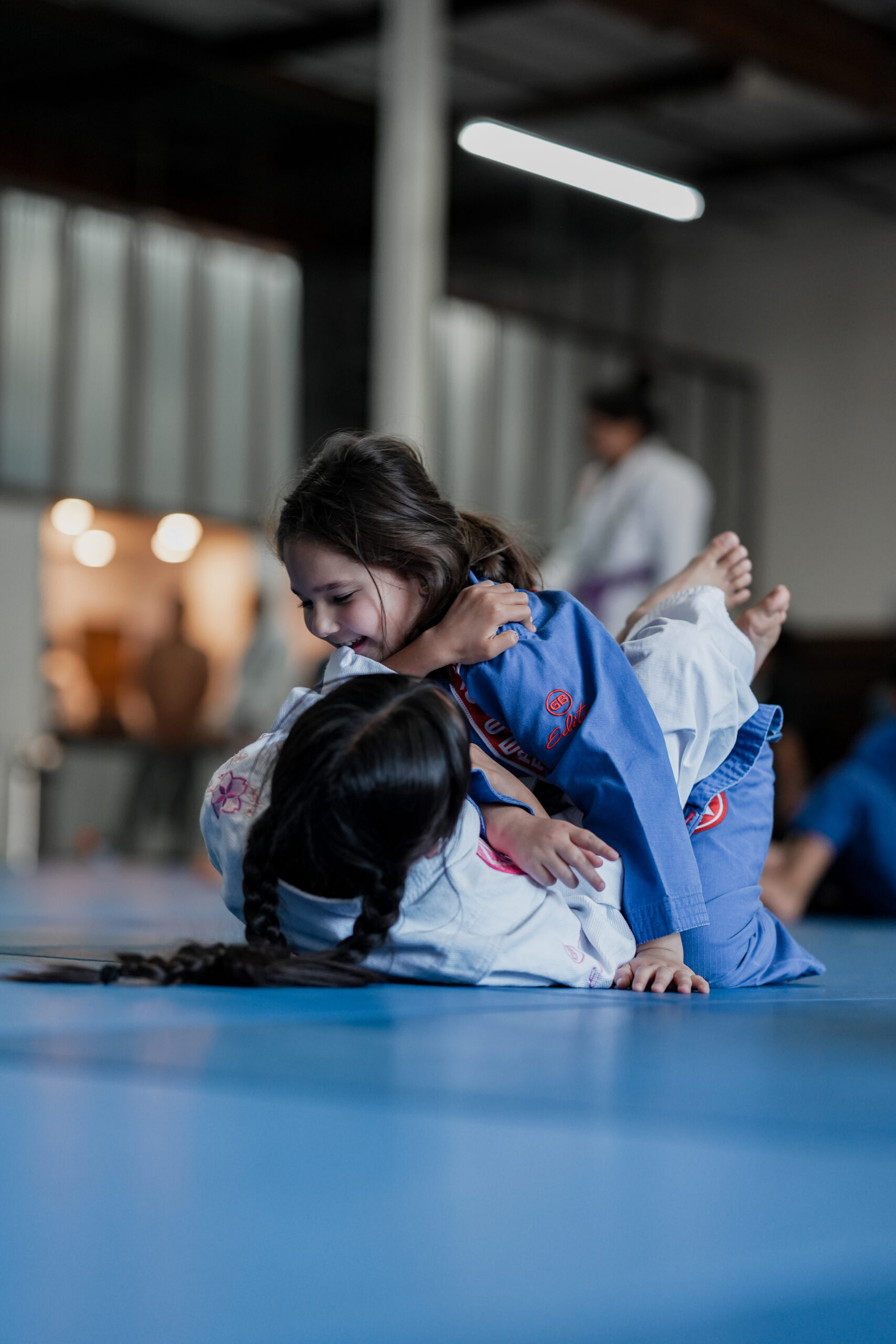
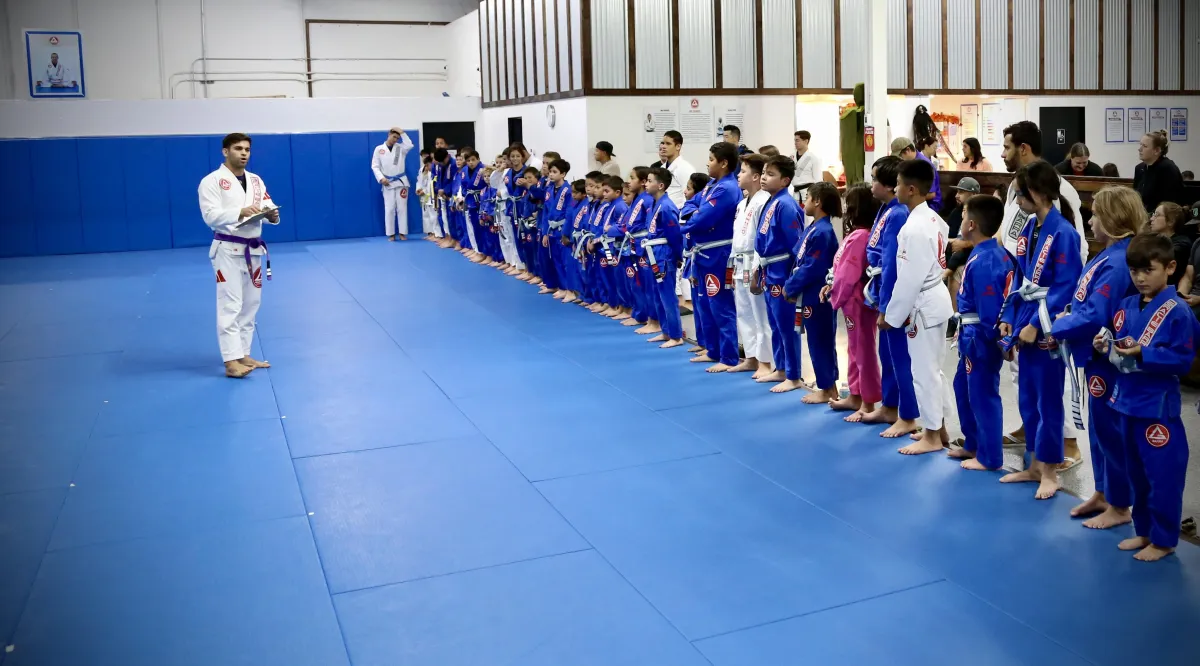
Making these mistakes does not mean you are bad at Jiu-Jitsu; it means you are learning. The environment at Gracie Barra Upland is designed to support you through this phase. Our professors expect these errors and know exactly how to correct them.
We provide a safe, structured space where you can fail forward. Every time you gas out, you learn to breathe better. Every time you get armbarred, you learn to keep your elbows tight.
Brazilian Jiu-jitsu in Upland
Embrace the white belt mentality. Be curious, be humble, and keep showing up. The mistakes you make today are the lessons that will build your black belt game tomorrow.
Ready to start making some mistakes and learning from them? Join the supportive community at Gracie Barra Upland. We are here to guide you every step of the way. Visit https://gbupland.com/ to sign up for your first class.